Best Apps to Learn English: Free and Paid Options Compared
The best-known apps for learning English, including Duolingo, BBC Learning English, Anki and Busuu: what each does well, free vs paid, and how to combine them.
Published 6 min read
In this article
- How to choose the right app for you
- Duolingo: build a daily habit
- BBC Learning English and LearnEnglish: free lessons you can trust
- Anki: vocabulary that stays in your memory
- Busuu, HelloTalk and Tandem: practise with real people
- Babbel: structured paid lessons
- Quick comparison
- A simple way to combine apps
- Common mistakes to avoid
There is no single best app to learn English; the right choice depends on what you need. Duolingo is great for building a daily habit, Anki helps you remember vocabulary, BBC Learning English and the British Council's LearnEnglish offer free, high-quality lessons, and apps like Busuu, HelloTalk and Tandem let you practise with real people.
In short: start with one free app for daily practice, add Anki for new words, and get real listening and speaking practice every week. Most learners progress faster by combining two or three tools than by relying on one.
How to choose the right app for you
Before you download anything, answer three quick questions:
- What is your goal? Everyday conversation, travel, work, or an exam like IELTS or TOEFL.
- What is your level? A beginner needs guided lessons. An intermediate learner usually needs more listening, speaking and vocabulary.
- Which skill is weakest? Vocabulary, listening, speaking, grammar or writing.
Pick apps that target your weakest skill, not just the most popular one. If you are preparing for an exam, also read our comparison of IELTS, TOEFL and the Duolingo English Test.
Duolingo: build a daily habit
Duolingo turns learning into short, game-like lessons: you match words, translate sentences, listen and repeat. Streaks and small rewards encourage you to come back every day, which is its biggest strength.
- Good for: beginners, and anyone who struggles to study regularly.
- Free vs paid: the core lessons are free with ads. A paid subscription removes ads and adds extra features.
- Limitation: the sentences are short and sometimes artificial, so Duolingo alone rarely takes you to confident, natural conversation.
Tip: don't chase the streak for its own sake. Five focused minutes where you say the sentences out loud are worth more than rushing through lessons.
BBC Learning English and LearnEnglish: free lessons you can trust
Two of the best resources are completely free and come from well-known organisations:
- BBC Learning English has courses organised by level, grammar and vocabulary lessons, and short programmes such as 6 Minute English, where two presenters discuss a topic using useful vocabulary. It is available on its website and YouTube channel.
- LearnEnglish from the British Council offers grammar explanations, listening and reading exercises, and practice sorted by level.
These sites are ideal for listening practice and for understanding grammar properly, which game-style apps often skip. They also use natural, real-world English.
Anki: vocabulary that stays in your memory
Anki is a flashcard app built on spaced repetition. Instead of reviewing every word every day, it shows you each card just before you are likely to forget it. Words you know well come back less often; words you find hard come back sooner.
- Free vs paid: Anki is free on Windows, macOS and Linux, on Android (as AnkiDroid) and on the web. The official iPhone app is a paid one-time purchase.
- How to use it well: make your own cards from words you meet in real content, and put a full example sentence on each card, not just a single word.
- Limitation: the interface looks plain, and it takes a little time to learn.
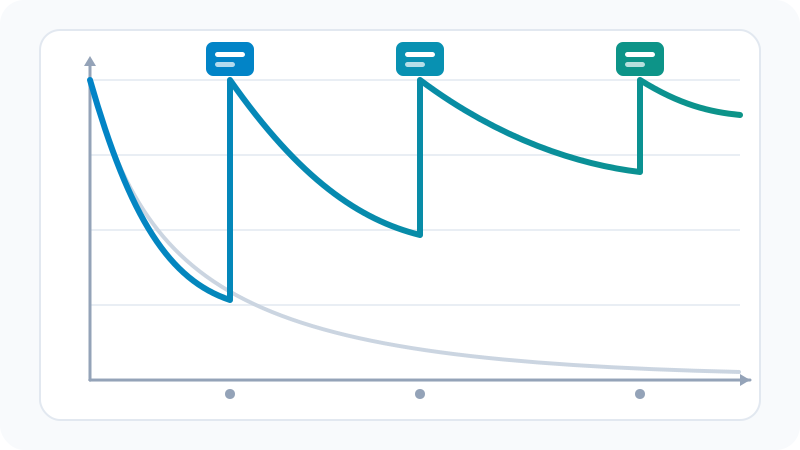
The chart shows the idea: without review (grey line) you forget most new words within days. Each review (the cards on top) brings the memory back, and every time it fades more slowly, so the gaps between reviews can get longer.
Busuu, HelloTalk and Tandem: practise with real people
Sooner or later, you need to use English with humans.
- Busuu combines structured lessons by level with a community feature: you submit short writing or speaking exercises and native speakers can comment and correct them. There is a free version with limits and a paid Premium plan.
- HelloTalk and Tandem are language exchange apps. You chat with native English speakers who want to learn your language, by text, voice messages or calls, and you help each other. Both work for free, with optional paid extras.
A safety note for exchange apps: keep conversations inside the app at first, don't share your address, phone number or financial details, and block anyone who makes you uncomfortable.
Babbel: structured paid lessons
Babbel is mainly a paid subscription, usually with a free first lesson so you can try it. Its lessons are short and focus on practical conversations, with clear grammar notes along the way. It suits people who prefer a structured course over a game. Check which interface languages are offered for the English course before you subscribe, because not every language pair is available.
Quick comparison
| App | Best for | Free option | Paid option |
|---|---|---|---|
| Duolingo | Daily habit, beginners | Yes, with ads | Subscription removes ads, adds features |
| BBC Learning English | Listening, grammar, real English | Fully free | None |
| British Council LearnEnglish | Grammar and practice by level | Free | Separate paid courses exist |
| Anki | Remembering vocabulary | Free (except iPhone app) | iPhone app is a one-time purchase |
| Busuu | Structured lessons + native feedback | Limited | Premium subscription |
| HelloTalk / Tandem | Talking with real people | Yes | Optional extras |
| Babbel | Structured conversation course | Trial lesson | Subscription |
Prices and plans change and can differ by country, so check the official app store page before paying.
A simple way to combine apps
Here is a realistic weekly routine that uses only free options:
- Every day (10 minutes): one Duolingo or Busuu lesson, spoken out loud.
- Every day (5 to 10 minutes): your Anki reviews, plus two or three new cards from things you read or heard.
- Three times a week (15 minutes): one 6 Minute English episode or a LearnEnglish listening exercise.
- Once or twice a week: a short chat on HelloTalk or Tandem, or a speaking session with an AI tutor, as we explain in how to learn a language with ChatGPT.
For extra listening, English videos with subtitles are hard to beat: see our guide to learning a language from YouTube, films and series.
Common mistakes to avoid
- Collecting apps instead of using them. Two apps used daily beat six apps opened once.
- Only tapping, never speaking. Say answers out loud. For accent work, try these free tools to improve your English pronunciation.
- Learning isolated words. Always learn a word inside a sentence.
- Staying in the comfort zone. When the lessons feel easy, move to real content: podcasts, articles and conversations.
- Paying too early. Use the free versions for a few weeks, then decide whether a paid plan is really worth it for you.
Frequently asked questions
Can I become fluent in English using apps alone?
Apps are excellent for building vocabulary and a daily habit, but fluency also needs lots of real listening and speaking. Use apps as your base and add podcasts, videos and conversations with real people.
How much time should I spend on an app each day?
Consistency matters more than long sessions. A short daily session you actually keep up, even 15 to 20 minutes, usually beats a long session once a week.
Do I need a paid subscription to make progress?
No. The free versions of these apps, plus free sites like BBC Learning English, are enough for a lot of progress. Pay only if a specific paid feature solves a real problem for you, and try the free trial first.
Which app is best for a complete beginner?
Duolingo is an easy starting point because the lessons are short and guided. Once you know some basic words, add Anki for vocabulary and BBC Learning English or LearnEnglish for listening and grammar.
Related tutorials
Language learning
Best Free Translation Tools: Google Translate, DeepL, Microsoft Translator and AI
Compare Google Translate, DeepL, Microsoft Translator and AI chatbots, with tips for more accurate translations and for keeping private text safe.
· 5 min read
Language learning
IELTS vs TOEFL vs Duolingo English Test: Which One Should You Take?
Compare IELTS, TOEFL and the Duolingo English Test: format, speaking section, scoring, who usually accepts each one, and how to prepare for the test you choose.
· 6 min read
Language learning
How to Improve Your English Pronunciation with Free Online Tools
Improve your English pronunciation for free with dictionary audio, phonetic symbols, shadowing, recording yourself, YouGlish and AI voice practice.
· 6 min read