How to Spot 'Make Money Online' Scams and Protect Yourself
Learn the warning signs of online money scams, from upfront fees and guaranteed returns to fake jobs and task apps, and how to check offers and report fraud.
Published 6 min read
In this article
A "make money online" offer is very likely a scam if it asks you to pay first, promises guaranteed or unusually high returns, or pressures you to act fast and keep it secret. Real work pays you for work you deliver; it doesn't charge you to unlock your earnings. Before you pay or share anything, stop, check the offer through independent sources, and report it if it's fake.
In short: if you have to pay to get paid, if profit is "guaranteed", or if someone rushes you into a private chat, walk away. Verify through official channels, never share codes or passwords, and report scams to the platform, your bank and the authorities in your country.
Why these scams work on smart people
Falling for a scam isn't about being naive. Scammers are skilled at what they do, and they build their offers carefully:
- They target real needs: extra income, a remote job, a way out of debt.
- They copy real brands: fake recruiters use the names of well-known companies, and fake apps look like real platforms.
- They pay a little first: a small early payout builds trust before the big request for money.
- They show fake proof: screenshots of earnings, glowing testimonials, busy group chats full of "happy members".
Knowing the pattern is your best protection. Once you can see it, most scams become easy to spot.
The red flags that apply to almost every scam
Treat any one of these as a reason to stop and check:
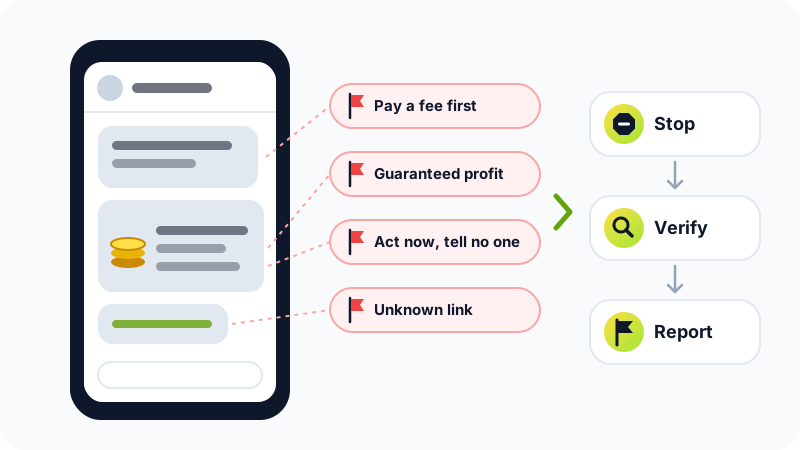
- You must pay first: a registration fee, training fee, "activation" or "deposit", or a "tax" before you can withdraw.
- Guaranteed profits: fixed daily or weekly returns, or "no risk". Real investments can always lose money.
- Pay far too high for easy work: big money for liking posts or copying text.
- Urgency and secrecy: "only today", "limited places", "don't tell your family".
- Moving to private chats: the conversation quickly moves from a platform to WhatsApp, Telegram or another private app.
- Unusual payment methods: gift cards, crypto, or wire transfers to a personal account.
- Requests for sensitive data: ID photos, bank login details, or one-time verification codes.
- Vague details: no clear job description, no contract, no real company address or registration.
Common scam types to know
Fake job offers
You get an unexpected message offering a remote job with high pay. The "interview" happens only by text chat and you're hired almost immediately. Then comes the catch: pay for training, buy equipment from their "supplier", or send your ID and bank details for "payroll". Real employers interview properly, give you a written offer, and don't charge you to work.
Task-app scams
You're told you can earn by rating products, liking videos or "boosting" apps. Small payouts arrive at first. Then you're asked to deposit your own money, often in crypto, to unlock bigger tasks or to withdraw your balance. The balance shown in the app isn't real, and the more you deposit, the more you lose.
Fake checks and overpayment
A "client" or "buyer" sends you a check or transfer for more than the agreed amount and asks you to send back the difference or pay a "supplier". Days later the original payment bounces or is reversed, and you owe your bank the money. Even when funds appear in your account, a check can still be returned later.
Crypto and forex "signals" and investment groups
Groups on social media sell "trading signals" or offer to manage your money with guaranteed returns. Some use fake trading platforms that show impressive profits on screen, but when you try to withdraw, you're asked to pay "fees" or "taxes" first. A newer variation starts with a friendly stranger online who slowly steers the conversation towards investing. Taqnio does not recommend trading as a way to earn income.
Pyramid schemes and MLM
If most of the money comes from recruiting new people rather than selling a real product to real customers, it's a pyramid scheme. Warning signs include expensive starter kits, pressure to buy stock every month, and being told to recruit your friends and family.
How to verify an offer before you commit
- Pause. Give yourself at least a day. Real opportunities don't disappear because you took time to think.
- Search it. Type the company or app name with words like "scam", "complaints" or "reviews".
- Go to the source yourself. Type the company's official website address into your browser instead of clicking links in the message, and contact it through the details listed there. Watch for lookalike addresses with small spelling changes.
- Check official registers. Many countries have a public business register, and financial regulators publish lists of licensed investment firms and warnings about unlicensed ones.
- Ask direct questions. What exactly is the work? Who pays me, how and when? Can I see a written contract? Scammers tend to dodge these.
- Talk to someone you trust. A second opinion breaks the pressure scammers depend on.
- Protect your accounts. Never share one-time codes or passwords, use a password manager, and turn on two-factor authentication.
What to do if you've been targeted or lost money
- Stop contact and don't send any more money, whatever they say about "releasing" your funds.
- Call your bank or payment provider immediately. The sooner you act, the better the chance of stopping or disputing a payment.
- Save evidence: screenshots, usernames, phone numbers, website addresses and transaction IDs.
- Secure your accounts: change passwords and turn on two-factor authentication. If you shared ID documents, watch for accounts opened in your name.
- Report it: to the platform where you met them, to the police or your country's official cybercrime or consumer protection reporting service, and to the financial regulator if it involved investments.
- Beware of "recovery" offers. People who promise to get your money back for an upfront fee are very often scammers too.
There's no shame in being targeted. Telling friends and family what happened can stop the same scam from reaching them.
Scam or legitimate? A quick comparison
| Scam | Legitimate opportunity | |
|---|---|---|
| Who pays whom | You pay them first | The client or platform pays you for delivered work |
| Promises | Guaranteed, fast, high income | No guarantees; results vary and take time |
| Communication | Pressure, secrecy, private chats | Clear terms, written agreements, official channels |
| Company details | Vague or impossible to verify | Real name, website and contact details you can check |
| Withdrawing money | Blocked by new "fees" | Paid according to clear, published terms |
Real ways to earn online exist, but they take work and patience. Freelancing, running a website, or creating content can all work over time. Our guides on starting freelancing from zero and making money from a website with Google AdSense explain what these paths honestly involve.
A simple rule to remember
When an offer online involves money, ask yourself one question: "Am I being asked to pay, or to share codes or documents, before I have been paid for real work?" If the answer is yes, stop and verify. That single habit protects you from most of the scams in this guide.
Frequently asked questions
Is every online job that asks me for money a scam?
A real employer or client doesn't charge you to get hired, start work or withdraw your earnings. Buying your own tools or a course you chose from a well-known provider is different. But if the person offering to pay you asks you to pay them first, stop.
I already sent money to a scammer. What should I do now?
Contact your bank or payment provider immediately, because acting quickly gives the best chance of stopping or disputing the payment. Stop all contact, don't send more money, save the evidence and report it. Be careful of anyone who then offers to recover your money for a fee, which is a common follow-up scam.
How can I check whether a company is real?
Search the company name together with words like 'scam' or 'reviews', type its official website address yourself, and contact it through the details listed there rather than the ones in the message. For investment firms, check your country's financial regulator, which usually publishes lists of licensed firms and warnings.
Are all MLM companies illegal?
It depends on the country. Some multi-level marketing companies operate legally, but schemes where money comes mainly from recruiting new members are pyramid schemes, which are illegal in many countries. Consumer protection agencies have warned that many MLM participants earn little or even lose money.
Related tutorials
Earning online
AI Skills Freelancers Can Sell: 6 Services and How to Deliver Them Well
Six AI-assisted services freelancers can offer, from writing and images to chatbots and automation, plus how to be honest with clients and check quality.
· 6 min read

Earning online
How to Start Freelancing From Zero: A Practical Beginner's Guide
Start freelancing with no experience: pick a skill, build a small portfolio, use platforms like Upwork, Fiverr or Mostaql, set your prices and get paid safely.
· 7 min read
Earning online
How to Make Money From Your Website With Google AdSense
How Google AdSense works, what RPM and CPC mean, how to get your site approved, which pages and policies matter, and why earnings take months to grow.
· 6 min read